May 18, 2026
HVAC
Why Your Air Conditioner Is Blowing Warm Air
Is your AC running but only pushing out warm air? Discover the most common reasons this happens and how to fix them fast before your home becomes unbearable.

May 18, 2026
HVAC
Is your AC running but only pushing out warm air? Discover the most common reasons this happens and how to fix them fast before your home becomes unbearable.
You set the thermostat, hear the system kick on, and wait for relief but what comes out of the vents is warm air. On a hot Inland Empire day, few things are more frustrating. Your AC is running, the blower is spinning, but the temperature in your home is not dropping.
This is not a rare problem. It is one of the most common AC complaints homeowners have, and it almost always has a diagnosable cause. Some causes you can fix yourself in five minutes. Others require a licensed technician. Knowing the difference saves time, money, and a lot of unnecessary stress.
Before assuming there is a mechanical failure, check your thermostat. A surprising number of warm-air calls are traced back to the fan being set to ON instead of AUTO. When the fan is set to ON, it runs continuously and blows air through your home even when the system is not actively cooling. The result is room-temperature air coming from the vents.
Switch the fan setting to AUTO and confirm the mode is set to COOL, not HEAT or OFF. Set the target temperature several degrees below the current room temperature and give the system five minutes to respond. If it starts cooling, the problem is solved with no service call needed.
Your AC system has two main components the indoor air handler and the outdoor condenser. Each can be on a separate circuit. If the outdoor unit’s breaker trips, the indoor fan keeps running but the condenser stops working entirely. Without the condenser and compressor doing their job, the system cannot remove heat from the air, so only warm air circulates.
Go to your electrical panel and look for any tripped breakers. Reset the breaker by switching it fully off and then back on. If it trips again immediately, do not keep resetting it. A repeatedly tripping breaker signals an underlying electrical issue that needs professional diagnosis.
A dirty air filter restricts the airflow your system needs to function correctly. When airflow over the evaporator coil drops too low, the coil cannot absorb heat from the air efficiently. In extreme cases, the coil freezes over completely, and the system begins blowing warm or barely cool air.
Pull the filter and hold it up to light. If you cannot see light passing through it, replace it immediately. Filters should be changed every one to three months during heavy use. In Inland Empire homes running the AC for months straight, monthly checks are wise. This single maintenance task prevents a wide range of system problems.
A frozen evaporator coil is counterintuitive ice on the coil actually blocks cooling. When ice builds up, warm air blows over a solid block of ice instead of passing through cold refrigerant-chilled fins. You may notice ice on the copper refrigerant lines leading to the indoor unit, reduced airflow from vents, or water pooling around the base of the air handler as the ice melts.
If you suspect a frozen coil, turn the system off and let it thaw. Running it with a frozen coil can burn out the compressor. Check the filter first restricted airflow is the most common cause of freezing. Low refrigerant is the second. Once thawed, if freezing recurs, call a technician to check refrigerant levels and inspect the coil.
Refrigerant is the substance that absorbs heat from inside your home and releases it outside. Without enough refrigerant, the system cannot transfer heat effectively, and the air it delivers stays warm. Refrigerant does not get “used up” like fuel if levels are low, it means there is a leak somewhere in the system.
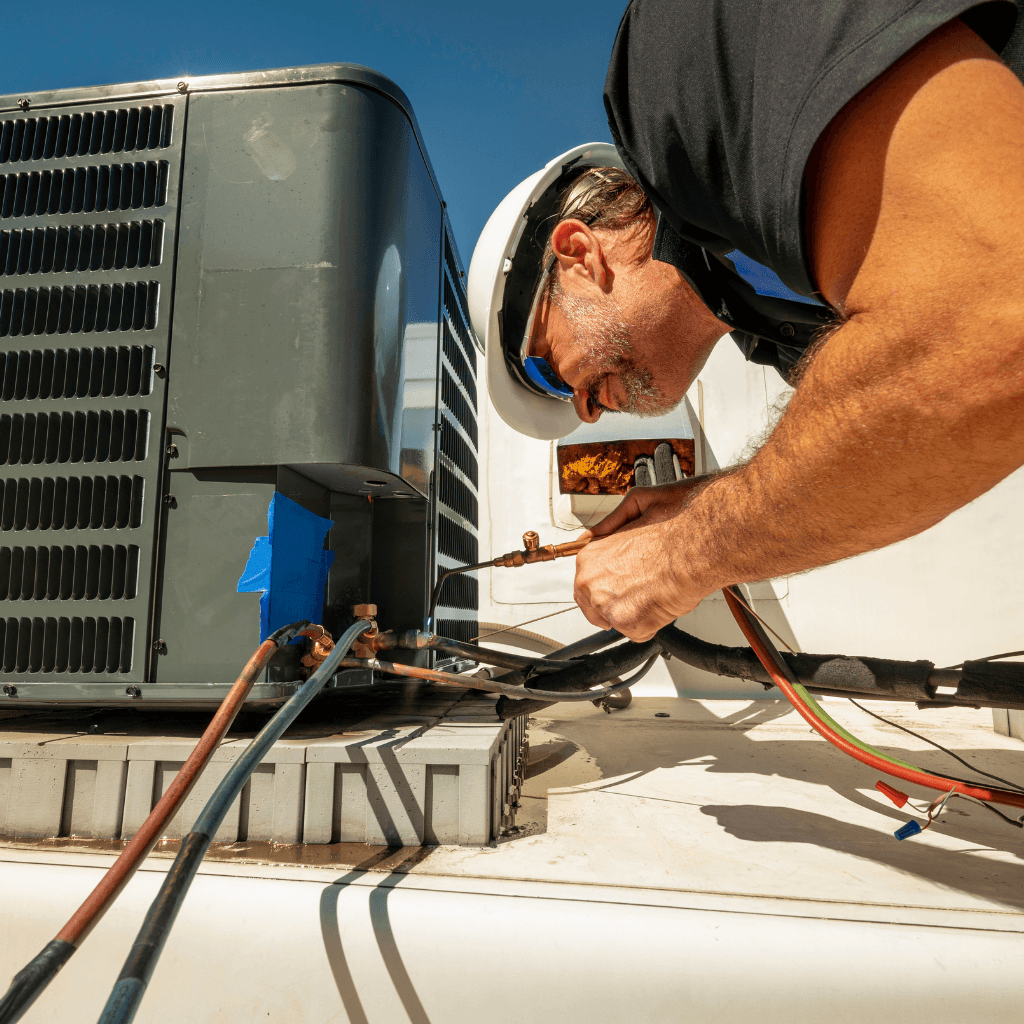
Signs of a refrigerant issue include the system running constantly without cooling the home, hissing or bubbling sounds from the unit, ice on the refrigerant lines, and noticeably higher energy bills. Refrigerant handling requires EPA certification, so this is not a DIY repair. A licensed technician will locate and repair the leak before recharging the system.
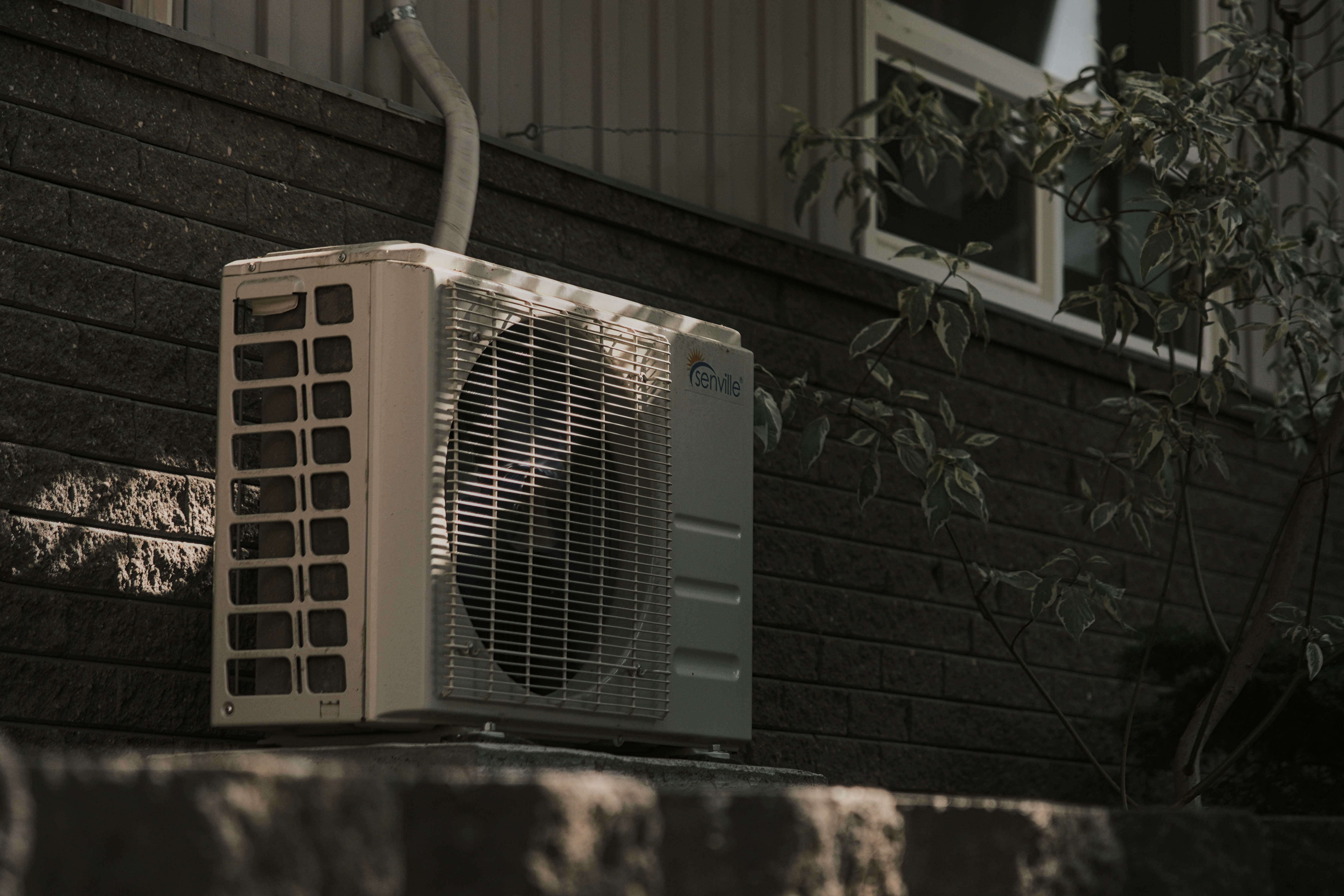
The outdoor condenser unit must release the heat it pulls from your home into the outside air. When the condenser coils are coated in dirt, grass clippings, or debris, heat cannot dissipate properly. The system works harder, efficiency drops, and in warmer conditions it may be unable to cool the air at all.
You can gently rinse the outdoor unit with a garden hose to clear light debris. Make sure the unit has at least two feet of clearance around it and that nothing is blocking the top. For heavy fouling or bent fins, a professional coil cleaning as part of annual maintenance is the right solution. In the Inland Empire, where dust and dry debris are constant, condenser cleaning is especially important.
The compressor is the heart of the cooling system. It pressurizes the refrigerant and drives the entire cooling cycle. When the compressor fails, the outdoor unit may still appear to run you might hear a hum or see the fan spinning but no actual cooling takes place. A failed start capacitor, which helps the compressor motor start each cycle, produces similar symptoms.
Capacitor failure is actually quite common, especially in systems that work hard in hot climates. The good news is that capacitors are a relatively inexpensive fix. Compressor failure is more serious and the repair cost depends on the age and condition of the overall system sometimes replacement of the whole unit makes more financial sense.
Start with the free, easy checks: thermostat settings, circuit breaker, and air filter. These resolve a meaningful share of warm-air complaints with no professional help required. If those are all fine and the system is still blowing warm air, the issue is mechanical refrigerant, coils, capacitor, or compressor and you need a qualified HVAC technician.
The worst thing you can do is keep running a system that is not cooling. Forcing a unit to operate with a frozen coil, no refrigerant, or a failing compressor can cause far more expensive damage. Shut it off, work through the checklist, and call a trusted local technician when the problem is beyond basic troubleshooting. Fast, accurate diagnosis always costs less than letting a fixable issue become a system replacement.