You have probably heard that scheduling an annual AC tune-up is important. Most homeowners follow that advice at some point but few actually know what a technician is doing during that visit or why each step matters. When you understand what a proper tune-up covers, you can evaluate whether the service you are getting is genuinely thorough or just a quick look that misses the things that matter most.
A professional AC tune-up is not a single task — it is a structured inspection and maintenance process that covers every major system component. Here is exactly what should happen during a complete service visit and what each step accomplishes.
System Performance Check Before Work Begins
A good technician starts by running the system and observing how it behaves before touching anything. This baseline check reveals whether the system is cooling, how long it takes to reach operating conditions, whether it is short-cycling or running continuously, and whether there are any unusual sounds or vibrations during operation.
This step matters because a system can have dirty components or worn parts that are not yet causing obvious failure but are reducing performance and efficiency. Starting with an operational baseline gives the technician a complete picture before cleaning and adjustments change those initial readings.
Air Filter Inspection and Replacement
The air filter is checked early in the visit. A visibly clogged or heavily discolored filter is replaced immediately, as restricted airflow affects nearly every other aspect of system performance. If the filter is moderately dirty but not yet at full restriction, the technician will note when it should be changed and advise on the appropriate replacement schedule based on your home’s usage and environment.
For homeowners in dusty regions or households with pets, the technician may recommend more frequent filter changes than the standard every-three-months guideline. This simple conversation delivers real value knowing the right filter schedule for your specific home prevents the airflow problems that cause a cascade of other issues.
Evaporator Coil Cleaning and Inspection
The evaporator coil sits inside the indoor air handler and is responsible for absorbing heat from the air passing over it. Over time, dust, biological material, and debris accumulate on the coil surface, creating an insulating layer that reduces heat transfer. Even a thin coating of buildup measurably reduces the system’s cooling capacity and efficiency.
During the tune-up, the technician inspects the coil condition and cleans it as needed using appropriate coil cleaning solutions. They also look for signs of ice formation, which indicates either a refrigerant issue or airflow restriction, and check the condition of the coil fins, which can become bent and reduce airflow.
Condenser Coil Cleaning and Outdoor Unit Inspection
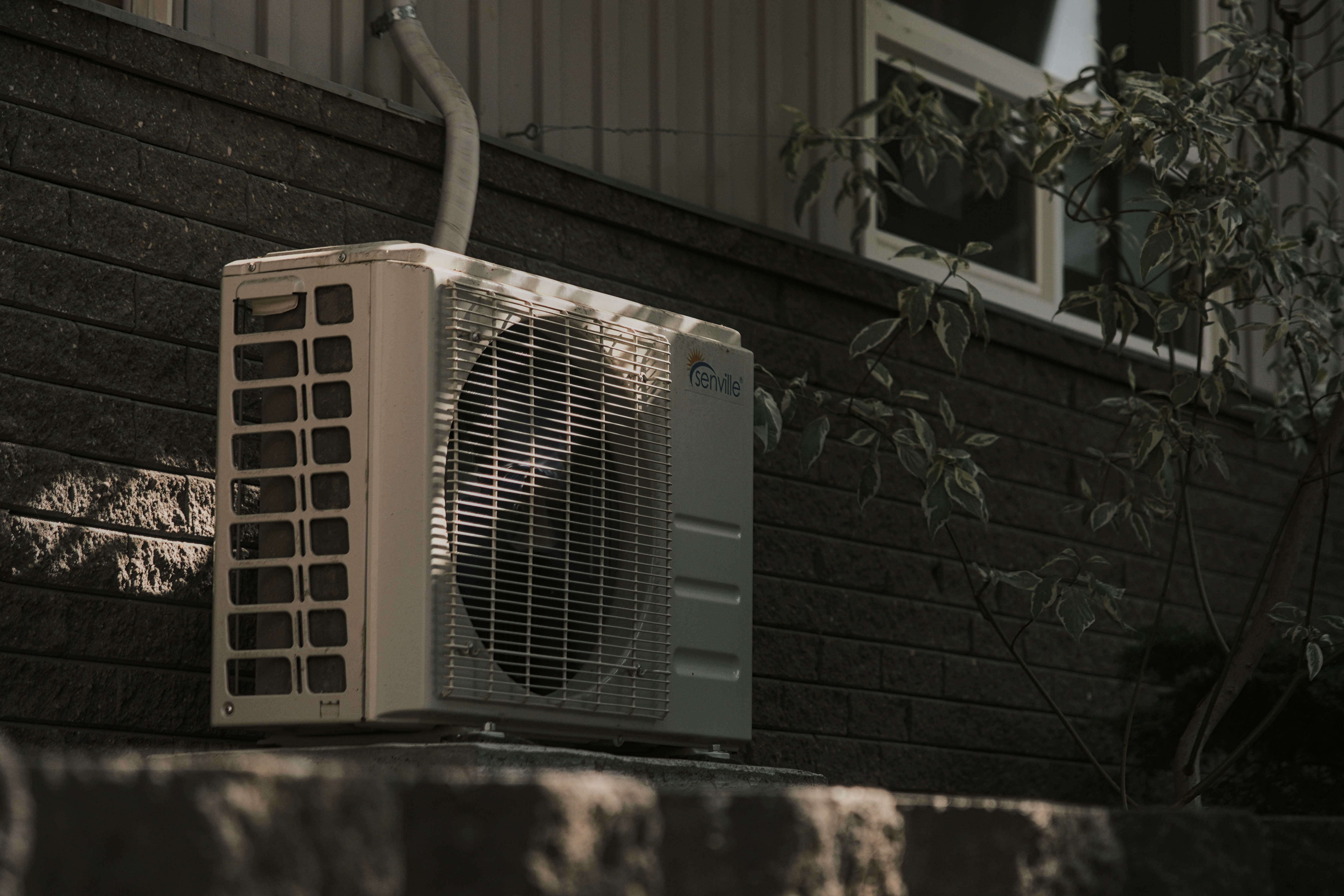
The outdoor condenser unit is exposed to the elements year-round. Dirt, grass, cottonwood seeds, pollen, and debris accumulate on and between the condenser coil fins, blocking the airflow the unit needs to reject heat to the outside air. A dirty condenser coil is one of the most common causes of reduced cooling efficiency and compressor overheating.
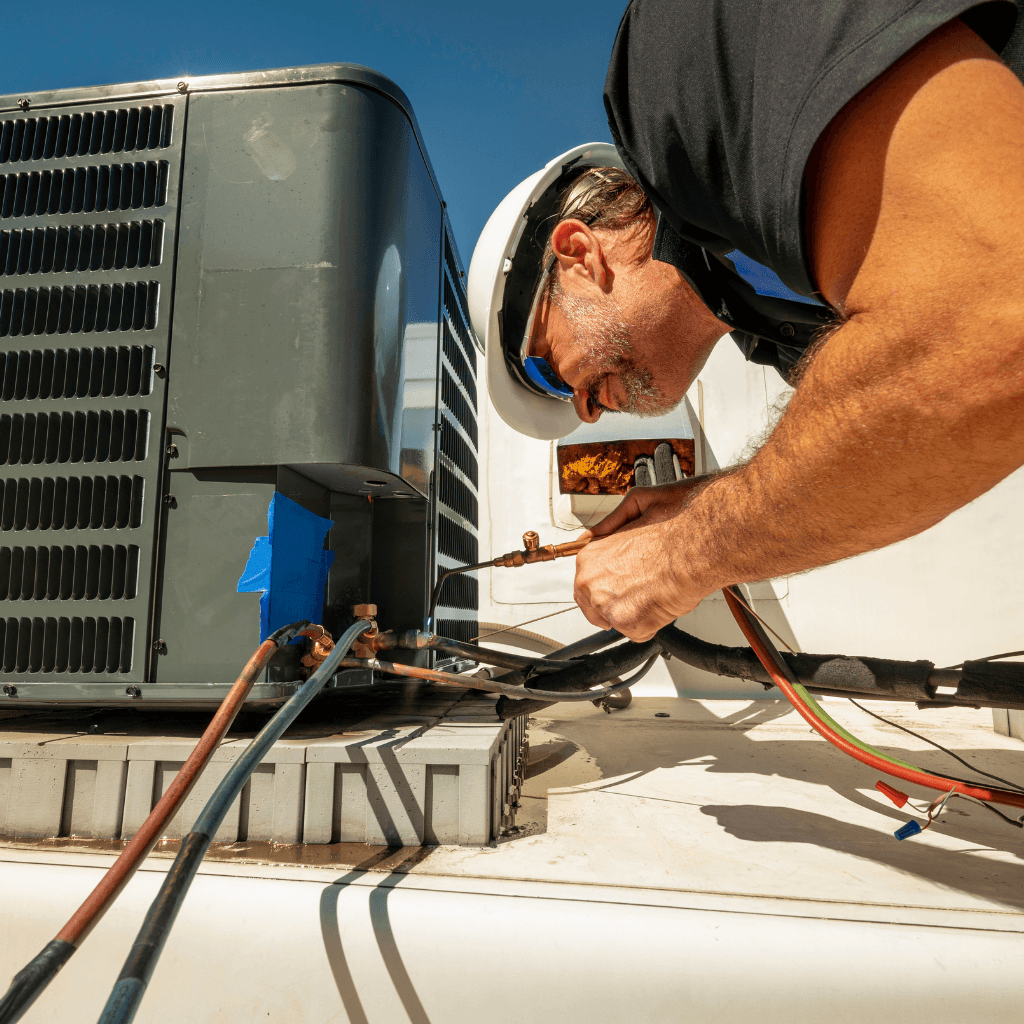
The technician cleans the condenser coils using a hose rinse or pressurized coil cleaner, inspects the condenser fan motor and blade for wear or damage, clears any debris from inside the unit, and checks that adequate clearance exists around the unit for proper airflow. In a climate like Riverside’s, where systems run for months, condenser coil condition directly affects how hard the compressor has to work all summer.
Refrigerant Level Check
Refrigerant charge the amount of refrigerant in the system directly determines how effectively your AC cools. Too little refrigerant reduces cooling capacity and causes the compressor to work harder than it should. Too much refrigerant creates excessive pressure that can damage the compressor. Proper charge is a precise specification set by the manufacturer.
Using manifold gauges, the technician measures the system’s operating pressures and compares them against manufacturer specifications for the current conditions. If levels are low, the technician looks for signs of a leak before adding refrigerant simply topping off without finding the leak source results in the same problem recurring within a season or two.
Electrical Components Testing
Electrical component failure is among the most common causes of AC breakdowns, and most failures can be predicted before they happen. During the tune-up, the technician tests the capacitors which help start and run the compressor and fan motors using a capacitance meter. A capacitor reading below its rated specification is approaching failure and should be replaced proactively.
The contactor an electrical switch that controls power to the outdoor unit is inspected for pitting and wear on its contact points. Wiring connections are checked for corrosion or looseness, which can cause intermittent system behavior. Voltage and amperage draws are measured on the compressor and fan motors to verify they are operating within their rated ranges.
Condensate Drain Line Flushing
As the AC removes humidity from the air, that moisture drains out through the condensate drain line. This line is a warm, moist environment where algae and mold grow naturally over time. A partially blocked line drains slowly. A fully blocked line causes water to overflow the drain pan, potentially damaging ceilings, walls, or flooring beneath the air handler.
During the tune-up, the technician flushes the condensate drain line typically with a water and vinegar solution or a specialized drain treatment to clear any buildup and confirm the line is draining freely. They also inspect the drain pan for standing water or signs of previous overflow, and verify that the float switch, which shuts the system off if the pan fills up, is functioning correctly.
Thermostat Calibration and Settings Review
The thermostat is the brain of the HVAC system. A thermostat that reads temperature inaccurately sends incorrect signals to the system, causing it to short-cycle, over-cool, or run continuously past the target temperature. During the tune-up, the technician verifies that the thermostat is reading accurately and that the system responds correctly to temperature changes.
For programmable or smart thermostats, the technician may confirm that schedules are set up correctly and that the thermostat is not located in a position where it is affected by direct sunlight, drafts, or nearby heat sources. An improperly positioned thermostat can cause accurate hardware to deliver inaccurate results.
Blower Motor and Airflow Inspection
The blower motor moves conditioned air through your ducts and into your living spaces. It is inspected for proper operation, unusual vibrations, and correct amperage draw. A motor pulling excessive amperage is working harder than it should a sign of bearing wear or airflow restriction that will shorten its lifespan if not addressed.
The blower wheel may also be cleaned if it shows significant debris accumulation, as buildup on the wheel blades reduces airflow efficiency. Lubrication of motor bearings, where applicable, is performed to reduce friction and extend component life. The technician also checks that all supply and return vents in accessible areas are unobstructed and open.
Final System Assessment and Homeowner Walkthrough
Once all inspections and maintenance tasks are complete, the technician runs the system again and measures supply air temperature at the vents, comparing it against return air temperature to verify the system is achieving the correct temperature drop typically 16 to 22 degrees Fahrenheit between return and supply. This confirms the system is delivering the cooling performance it should.
A thorough technician then walks the homeowner through every finding what was checked, what was cleaned, what is in good condition, and what showed signs of wear or needed attention. Any recommendations for repair or component replacement should be explained clearly with honest pricing, not presented as urgent upsells. This final conversation is where you get real value from the visit: an accurate picture of your system’s health heading into the season it will need to perform at its best.